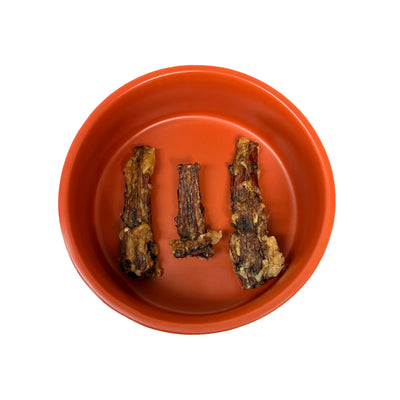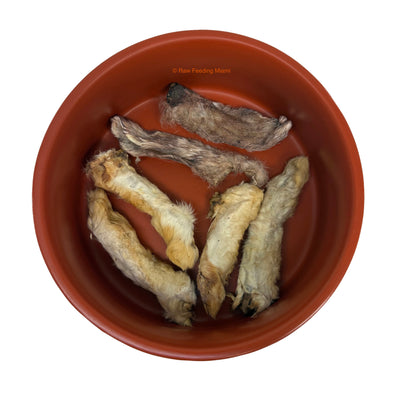


Light, Crunchy, Fur On.
Dehydrated Lamb Ears
Our dehydrated lamb ears are one ingredient, with the natural fur left on. They come from open-pasture farms in the USA and aren't enhanced.
A lamb ear is thin cartilage and skin, so it dries into a light, crunchy chew instead of a dense one. That makes lamb ears for dogs a good size for small mouths that can't handle a beef ear or bully stick. They work for cats and ferrets too. The fur adds fiber, and the cartilage brings protein and minerals.
2 ears per pack. Each one is a different size, shape and color. Always supervise.
Want a bigger ear?

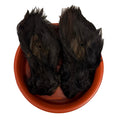
Our dehydrated lamb ears are one ingredient, with the natural fur left on. They come from open-pasture farms in the USA and aren't enhanced.
A lamb ear is thin cartilage and skin, so it dries into a light, crunchy chew instead of a dense one. That makes lamb ears for dogs a good size for small mouths that can't handle a beef ear or bully stick. They work for cats and ferrets too. The fur adds fiber, and the cartilage brings protein and minerals.
2 ears per pack. Each one is a different size, shape and color. Always supervise.
Good to know
Feeding tips
How much to feed
Most adult dogs and cats eat about 2 to 3% of their body weight a day. Puppies and kittens need more. Adjust up or down based on your pet's body condition.
Building a balanced bowl
A good starting ratio is 80% muscle meat, 10% bone, 5% liver and 5% other secreting organ like kidney or spleen. Rotate proteins through the week for variety.
Trying something new
Start with a small amount mixed into a meal your pet already eats, then build up over a few days. If stool gets loose, slow down.
Bones and chews
Always supervise, and never feed cooked bones.
Feeding cats
Cats need taurine. If you feed grinds or muscle meat, add a taurine supplement or a base mix that includes it.
Raw feeding fact
Pairs well with