

Glandular Organ. Novel Protein.
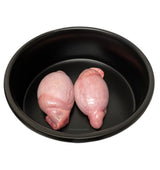
Goat Testes
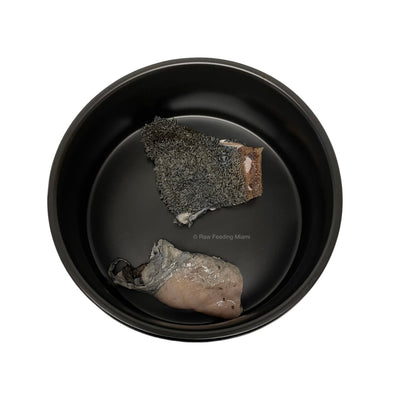
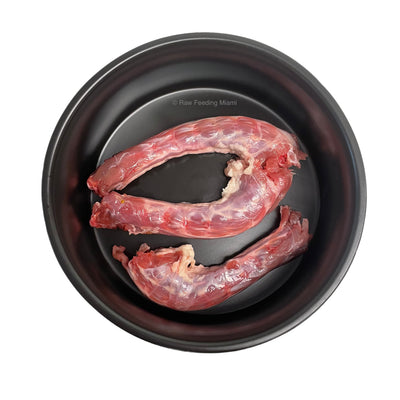
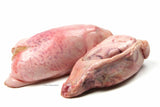
Our raw goat testes come from pastured goats in New Zealand or Australia. They're a rich glandular organ and a novel red meat for pets that need a break from beef, chicken and pork.
Testicles for dogs, including goat testicles, count as organ, not muscle meat. In a prey model diet, glandular organs like these are fed in small amounts and count toward the organ part of the bowl. Goat is new to a lot of dogs and cats, which makes this useful for rotation or for pets that react to common meats. Every piece is a different size, shape and weight.
Sold frozen in 1 lb packs.
Frozen orders ship at 10 lbs or more.
This counts everything frozen already in your cart.
Local pickup at our Miami shop has no minimum.
More goat organs?

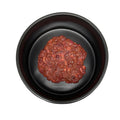
Our raw goat testes come from pastured goats in New Zealand or Australia. They're a rich glandular organ and a novel red meat for pets that need a break from beef, chicken and pork.
Testicles for dogs, including goat testicles, count as organ, not muscle meat. In a prey model diet, glandular organs like these are fed in small amounts and count toward the organ part of the bowl. Goat is new to a lot of dogs and cats, which makes this useful for rotation or for pets that react to common meats. Every piece is a different size, shape and weight.
Sold frozen in 1 lb packs.
Good to know
Shipping & thawing
How it ships
We ship all of our products frozen in insulated boxes with dry ice and ice packs. We ship all of our products via FEDEX and UPS to the 48 continental United States. We have a minimum of 10 LBS for shipping because the carriers bill by dimensional weight for anything under that weight. We include your insulated box and the dry ice & ice packs in our shipping rates.
When it ships
Please note that most orders will take one week for processing. We only ship on Mondays, Tuesdays and Wednesdays depending on transit time. Processing time + carrier transit time = total delivery time.
Free shipping
Free shipping is available on qualifying orders over $200. Cannot be combined with discounts or promotions. ZIP codes requiring 5-day carrier transit are excluded from free shipping.
Thawing
Thaw in the fridge, not on the counter. Keep thawed portions sealed and covered, and only take out what you'll feed in the next few days. If any of your products arrive thawed or starting to defrost, this is perfectly fine and safe! It is perfectly safe to thaw and re-freeze pet food. Unfortunately we cannot guarantee that orders will arrive fully frozen.
West Coast Customers: We strongly urge you to select Express Air as your shipping method during spring and summer months.
Full shipping policy and FAQFeeding tips
How much to feed
Most adult dogs and cats eat about 2 to 3% of their body weight a day. Puppies and kittens need more. Adjust up or down based on your pet's body condition.
Building a balanced bowl
A good starting ratio is 80% muscle meat, 10% bone, 5% liver and 5% other secreting organ like kidney or spleen. Rotate proteins through the week for variety.
Trying something new
Start with a small amount mixed into a meal your pet already eats, then build up over a few days. If stool gets loose, slow down.
Bones and chews
Always supervise, and never feed cooked bones.
Feeding cats
Cats need taurine. If you feed grinds or muscle meat, add a taurine supplement or a base mix that includes it.
Raw feeding fact