


Beef Heart
One Of The Richest Natural Sources Of Taurine.
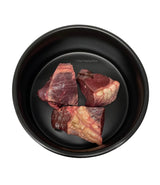
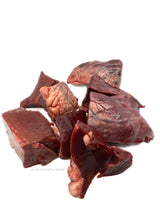
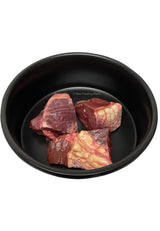
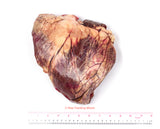
Beef Heart is a dense, muscle-based cut naturally rich in taurine, an amino acid that plays a critical role in animal heart and eye health.
As one of the hardest-working muscles in the body, beef heart is unusually dense in myoglobin and iron, giving it a deep, dark color and a notably rich nutrient profile compared to more common cuts. It's also an excellent source of vitamin B12, delivering well over three times the daily requirement in a single 100-gram serving, along with meaningful riboflavin and selenium. Because cardiac muscle works continuously, it develops an especially dense concentration of mitochondria, the cellular structures responsible for energy production, which is part of why heart tends to be so nutrient-rich relative to its size.
Nutritional Profile
Beef Heart
Approximate values per 100g (3.5 oz). Source: USDA FoodData Central, Beef, heart, raw
* Nutritional values are sourced from USDA FoodData Central (Beef, heart, raw, SR Legacy) and are approximate. Actual values vary by animal, season, and batch.
Raw Feeding Fact
Despite living inside the chest cavity, heart is classified as muscle meat, not organ meat, when building a raw diet. It doesn't perform any secretory or metabolic function the way liver, kidney, or spleen do, it's simply a very hardworking muscle that happens to be housed near other organs. That distinction matters when following a ratio-based model like 80/10/5/5, since heart should be counted toward the muscle meat portion of the diet rather than the smaller organ meat allowance, and mixing the two up is one of the more common mistakes new raw feeders make.